
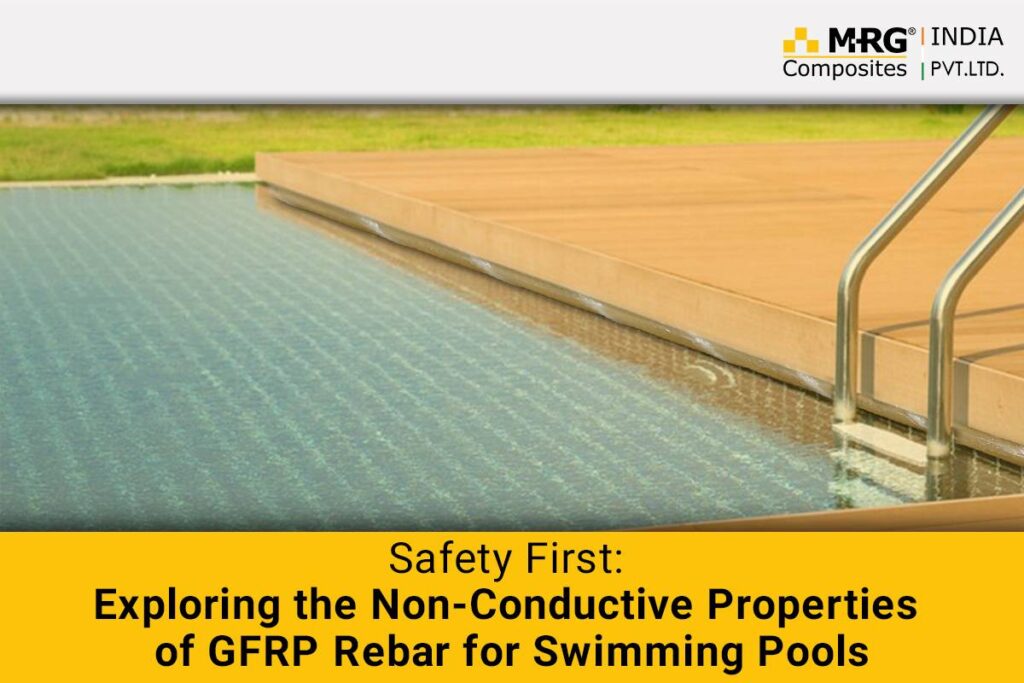
Swimming pools are designed for recreation, relaxation, and fitness, but they also require careful planning to ensure long-term safety and structural durability. Since swimming pools operate in a water-filled environment with electrical systems such as underwater lighting, pumps, filtration units, and control equipment, selecting the right construction materials is essential.
One often overlooked aspect of swimming pool construction is the reinforcement used inside the concrete. Traditional steel reinforcement is widely used but conducts electricity and is susceptible to corrosion in wet and chemically aggressive environments. Glass Fiber Reinforced Polymer (GFRP) rebar offers a modern alternative that combines high strength with non-conductive and corrosion-resistant properties, making it an ideal reinforcement solution for swimming pools.
Why Electrical Safety Matters in Swimming Pools
Water is an excellent conductor when impurities and dissolved minerals are present. Swimming pools also contain electrical equipment that powers lighting systems, circulation pumps, heating systems, and filtration units. While these systems are designed with strict safety standards, every component used during construction should contribute to creating a safer environment.
Using reinforcement that does not conduct electricity adds an extra layer of protection to the structure. This makes material selection an important consideration for engineers, architects, and contractors involved in swimming pool construction.
What Is GFRP Rebar?
GFRP Rebar (Glass Fiber Reinforced Polymer Rebar), also known as fiberglass rebar or composite rebar, is manufactured using high-strength glass fibers embedded in a durable polymer resin matrix.
Unlike conventional steel reinforcement, GFRP rebar does not rust, corrode, or conduct electricity. It provides excellent tensile strength while remaining lightweight, making it suitable for projects exposed to moisture, chemicals, and harsh environmental conditions.
Today, GFRP rebar is widely used in swimming pools, marine structures, wastewater treatment plants, bridge decks, underground structures, and other infrastructure projects where durability and corrosion resistance are critical.
How GFRP Rebar Improves Electrical Safety in Swimming Pools
Non-Conductive Reinforcement
The most significant advantage of GFRP rebar is that it is electrically non-conductive. Unlike steel, it does not carry electrical current through the reinforcement system.
In swimming pools where electrical installations are located nearby, non-conductive reinforcement helps improve overall electrical safety by eliminating electrical conductivity through the reinforcing bars themselves.
Supports Safer Pool Construction
Swimming pools include several electrical components, including underwater lights, pumps, filtration systems, and automation equipment. While these systems are protected through proper electrical design and safety standards, using GFRP rebar adds another level of protection by ensuring the reinforcement material itself does not conduct electricity.
Reliable Performance in Wet Environments
Swimming pools remain exposed to water throughout their service life. Unlike steel reinforcement, GFRP rebar maintains its electrical insulation properties even in continuously wet environments, making it a dependable reinforcement solution for aquatic structures.
Additional Benefits of GFRP Rebar for Swimming Pools
Beyond improving electrical safety, GFRP Rebar for Swimming Pool offers several additional advantages that enhance the durability and long-term performance of reinforced concrete structures.
Superior Corrosion Resistance
Swimming pools are constantly exposed to moisture, chlorine, and water treatment chemicals. Steel reinforcement can gradually corrode under these conditions, leading to concrete deterioration and costly repairs.
GFRP rebar is highly resistant to corrosion, helping preserve the structural integrity of the swimming pool while reducing maintenance requirements.
High Tensile Strength
Although lightweight, GFRP rebar provides excellent tensile strength to reinforce swimming pool walls, floors, and surrounding concrete elements. It helps the structure withstand service loads while maintaining long-term stability.
Lightweight and Easy to Handle
GFRP rebar weighs significantly less than conventional steel reinforcement. Its lightweight design simplifies transportation, handling, and installation, improving construction efficiency and reducing labor requirements.
Chemical Resistance
Swimming pools contain chlorine, disinfectants, and other treatment chemicals that create aggressive conditions for conventional reinforcement materials. GFRP rebar remains unaffected by these chemicals, making it well suited for long-term use in aquatic environments.
Longer Service Life
Since GFRP rebar does not rust or corrode, it helps extend the lifespan of swimming pool structures. Reduced deterioration means fewer repairs, lower maintenance costs, and improved lifecycle value.
Design Flexibility
GFRP rebar is available in multiple diameters and configurations, allowing engineers to use it across various residential, commercial, and public swimming pool projects.
Installation Best Practices
To achieve maximum performance, GFRP rebar should be installed according to the manufacturer’s recommendations. Proper spacing, anchorage, support, and handling help ensure the reinforcement performs as intended throughout the service life of the structure.
Following recommended installation practices also improves the durability and reliability of reinforced concrete swimming pools.
Long-Term Cost Benefits
Although the initial material cost of GFRP rebar may be higher than conventional steel reinforcement, its long-term advantages often result in lower lifecycle costs.
Its corrosion resistance minimizes maintenance requirements, while its durability reduces the need for repairs and replacement over the life of the structure. This makes GFRP rebar a cost-effective investment for swimming pool projects where long-term performance is a priority.
Applications of GFRP Rebar in Aquatic Structures
The unique properties of GFRP rebar make it suitable for a wide range of water-related construction projects, including:
- Residential swimming pools
- Commercial swimming pools
- Hotel and resort pools
- Water parks
- Therapy and rehabilitation pools
- Decorative fountains
- Water storage tanks
- Marine structures
- Water treatment facilities
Why Choose MRG Composites?
MRG Composites is a trusted GFRP Rebar Manufacturer in India, delivering high-performance composite reinforcement solutions for infrastructure projects across India and international markets.
Our GFRP rebars are engineered to provide:
- Non-conductive performance
- Superior corrosion resistance
- High tensile strength
- Lightweight handling
- Excellent chemical resistance
- Long service life
Whether you are constructing residential swimming pools, commercial aquatic facilities, or other water-retaining structures, MRG Composites offers reliable GFRP reinforcement solutions designed for durability, safety, and long-term performance.
Conclusion
Electrical safety is an important consideration in swimming pool construction, and selecting the right reinforcement material contributes to the overall reliability of the structure. With its non-conductive properties, corrosion resistance, high tensile strength, and long service life, GFRP rebar provides a dependable reinforcement solution for modern swimming pools.
By choosing GFRP rebar, builders and developers can create durable, low-maintenance, and safer swimming pool structures that perform reliably even in challenging aquatic environments. As a trusted GFRP Rebar Manufacturer in India, MRG Composites delivers advanced composite reinforcement solutions that meet the evolving demands of modern construction.