
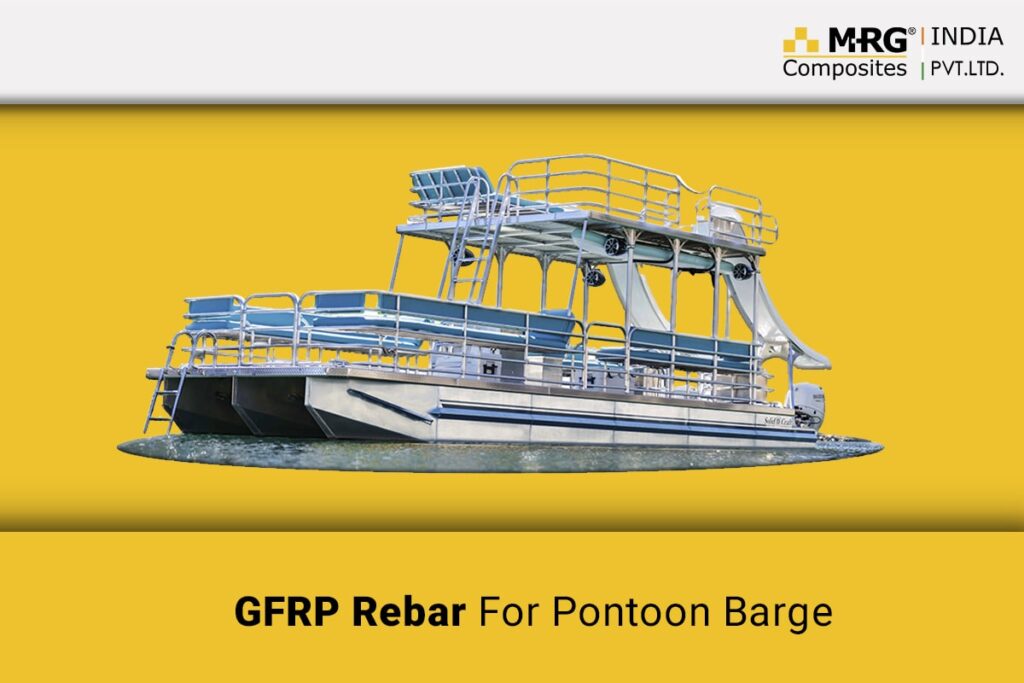
Pontoon barges and floating structures live in water. Moisture never lets up, wet-dry cycles repeat all day, and in marine settings the water carries chlorides too. For the reinforced concrete parts of these structures, that mix puts steel reinforcement under real strain over the years.
So engineers look at GFRP rebar as an alternative.
GFRP, or Glass Fiber Reinforced Polymer rebar, is a non-metallic reinforcement. Continuous glass fibers sit inside a polymer resin matrix. The bars weigh little, carry high tensile loads and don’t suffer the electrochemical corrosion that attacks steel.
That combination makes GFRP relevant for pontoons, floating platforms and waterfront work where corrosion resistance and light reinforcement count.
Can GFRP Rebar Be Used for Pontoon Barges?
Yes. Designers can specify GFRP rebar for the reinforced concrete components of pontoon barges and similar floating structures, as long as the design matches the structure’s loads and exposure.
It fits best where the structure faces:
- Freshwater and constant moisture
- Saltwater and marine conditions
- Chloride-rich water
- Wet-dry cycles
- Splash zones
- Coastal conditions
Steel rusts in water and chlorides. GFRP doesn’t. That takes reinforcement corrosion off the list of causes behind concrete cracking, delamination and spalling.
One warning, though. Don’t swap GFRP in for steel bar for bar. GFRP has a lower modulus of elasticity and behaves differently under load, so the design has to account for its tensile strength, stiffness, crack control and deflection.
What Is a Pontoon Barge?
A pontoon barge is a floating platform that sits on buoyant pontoons. Depending on the design, crews use it for construction work, transport, marine operations, floating platforms, access systems and other waterfront jobs.
Some pontoons float in lakes and rivers. Others work along the coast or out at sea. What the reinforcement needs depends on the materials in the structure and the water it operates in.
For the concrete parts, corrosion resistance matters most when saltwater or chlorides are around.
Why Is GFRP Rebar Suitable for Pontoon Barge Applications?
GFRP brings a handful of properties that suit floating and marine structures.
1. Corrosion Resistance
Engineers mostly turn to GFRP for one reason: it doesn’t corrode. If you want the full picture, read our guide to corrosion-resistant GFRP rebar.
Steel corrodes when moisture and chlorides reach it. The rust takes up more room than the metal did, so it pushes against the concrete and causes cracking, delamination and spalling.
GFRP never goes through that process. On a pontoon sitting in water or saltwater, that removes one major route to reinforcement damage.
2. Lightweight Construction
GFRP weighs far less than steel. That helps when crews transport, lift and place the bars, especially at remote or waterfront sites where moving heavy material takes real effort.
Workers also handle the bars with less strain. Actual savings in labor and transport still depend on the project and the site. Read more about the lightweight properties of GFRP rebar if you want the details.
3. High Tensile Strength
GFRP carries high tensile loads and works as reinforcement in a properly designed concrete structure.
Strength isn’t the whole story, though. GFRP is less stiff than steel and responds to loading differently. Designers look at tensile capacity, stiffness, reinforcement ratio, crack width, deflection and development requirements together. Our guide to GFRP rebar strength goes deeper into the mechanical side.
4. Non-Metallic Properties
GFRP is non-magnetic and non-conductive. Those traits help in specialized applications where you need to keep electromagnetic or electrical effects to a minimum. Most pontoon projects don’t require them, so treat them as a bonus for specific jobs.
Where Can GFRP Rebar Be Used in Pontoon Construction?
The exact layout depends on the pontoon’s design. Where the structure uses reinforced concrete, designers can consider GFRP for parts such as:
- Concrete pontoon decks
- Floating concrete platforms
- Reinforced concrete slabs
- Walkways and access platforms
- Floating docks
- Waterfront concrete structures
- Other concrete components exposed to moisture or chlorides
Engineers should check each component on its own, looking at loading, exposure, geometry and the applicable design requirements.
GFRP Rebar for Freshwater Pontoons
Plenty of pontoons never see the sea. They float on lakes, rivers and other freshwater.
Freshwater treats concrete differently than seawater does, but the concrete still faces constant moisture, wet-dry cycles and other stresses. GFRP’s corrosion resistance adds a durability margin wherever steel corrosion is a worry.
It doesn’t replace good practice, though. Freshwater pontoons still need sound concrete design, enough cover, proper curing, crack control and careful construction.
GFRP Rebar for Marine and Saltwater Pontoons
Marine settings make the strongest case for corrosion-resistant reinforcement.
Saltwater carries chlorides, and chlorides work their way through concrete to the steel inside. Once corrosion starts, the damage spreads into the surrounding concrete.
GFRP doesn’t rust in chloride-rich water. That makes it worth a close look for the concrete parts of marine pontoons, floating docks and other waterfront structures.
Even so, the reinforcement is only one part of the durability picture. Concrete quality, cover, cracking, drainage, workmanship and the real exposure conditions all play a role.
GFRP Rebar vs Steel Rebar for Pontoon Structures
GFRP and steel differ in more ways than price, so compare them across the board.
| Factor | GFRP Rebar | Steel Rebar |
| Corrosion resistance | Resists conventional electrochemical corrosion | Can corrode under suitable exposure conditions |
| Weight | Lightweight | Heavier |
| Tensile strength | High | High |
| Modulus of elasticity | Lower than steel | Higher |
| Magnetic properties | Non-magnetic | Magnetic |
| Electrical conductivity | Non-conductive | Conductive |
| Chloride exposure | Does not rust like steel | Chlorides can contribute to corrosion |
| Field bending | Manufactured in advance in most cases | Can generally be bent on site |
| Cutting | Abrasive or diamond tools | Conventional steel-cutting methods |
None of this makes GFRP the automatic winner. Pick the reinforcement based on structural demands, exposure, design provisions and project goals. For a wider look at the two materials, read our complete guide to GFRP rebar vs steel rebar.
How Does GFRP Rebar Help With Pontoon Durability?
The main durability gain is simple: no reinforcement corrosion.
With steel, corrosion products expand and push on the concrete. Over time that leads to:
- Cracking
- Delamination
- Spalling
- Reinforcement deterioration
- Higher maintenance needs
GFRP skips that whole mechanism. In a well-designed structure, it takes reinforcement corrosion out of the picture.
But GFRP doesn’t make a pontoon immune. Concrete still suffers from cracking, abrasion, impact, freeze-thaw exposure, poor drainage and bad workmanship.
Does GFRP Rebar Make Pontoon Barges Maintenance-Free?
No.
GFRP lowers the risk of reinforcement corrosion, but the structure still needs proper design, construction and upkeep. Pontoons deal with a lot:
- Constant water exposure
- Mechanical impact
- Abrasion
- Concrete cracking
- Freeze-thaw conditions in colder climates
- UV exposure on exposed materials
- Changing water levels
- Marine environmental stresses
GFRP solves one specific problem. Inspection, maintenance and good concrete design still matter.
What Should Engineers Consider Before Using GFRP Rebar in a Pontoon?
GFRP behaves differently from steel, so engineers evaluate it against the actual project.
Structural loading. The reinforcement must supply the tensile capacity the design loads require.
Modulus of elasticity. GFRP is less stiff than steel, and that affects crack width and deflection calculations.
Reinforcement ratio. Designers set GFRP ratios using the applicable design provisions. They don’t just swap in the same bar size they would use for steel.
Bar configuration. Manufacturers produce bent GFRP bars to shape. Crews don’t bend them on site the way they bend steel.
Environmental exposure. The design needs to reflect whether the pontoon floats in freshwater, brackish water, seawater or another aggressive setting.
Concrete quality. Corrosion-resistant reinforcement doesn’t replace good mix design, curing, cover and crack control.
Applicable standards. Check that the GFRP product meets the project’s standards and specifications, and read the manufacturer’s technical documentation before you use it.
How Is GFRP Rebar Installed in Pontoon Construction?
Crews place GFRP using the same basic principles as steel, but a few practices change.
Cutting. Crews cut GFRP with abrasive wheels or diamond blades. They wear protective equipment and control dust while they work.
Bending. Nobody heats and bends GFRP on site. The design specifies bent shapes, and the manufacturer produces them.
Handling. The bars are light, but crews still store and handle them as the manufacturer recommends so they don’t get damaged.
Placement. Workers position the reinforcement according to the approved drawings and keep the required spacing, cover and supports in place while the concrete goes in.
What Are the Benefits of Using GFRP Rebar in Pontoon Barges?
With the right specification and design, GFRP offers several benefits for pontoon work:
- Corrosion resistance: It doesn’t undergo conventional electrochemical corrosion.
- Light weight: Crews transport, lift and handle it more easily than steel.
- High tensile strength: It gives reinforced concrete substantial tensile capacity.
- Non-metallic makeup: It suits jobs that need non-magnetic, non-conductive reinforcement.
- Less corrosion-related deterioration: It removes steel corrosion as a cause of damage.
- Fit for aggressive environments: It works well in chloride-rich and moisture-heavy settings.
Weigh these against your structural requirements and project conditions. Don’t assume they apply to every job.
How Much Does GFRP Rebar Cost for Pontoon Construction?
No single price covers every pontoon project. The cost shifts with:
- Bar diameter
- Required quantity
- Bar length
- Straight or bent configuration
- Project specifications
- Order volume
- Transportation distance
- Manufacturing requirements
Don’t stop at the purchase price, either. Transportation, handling, installation and possible corrosion-related maintenance all feed into total project cost. For more on what drives pricing, see our GFRP bar price in India guide.
Is GFRP Rebar a Good Option for Pontoon Barges?
It can be, especially for pontoon and floating concrete structures where corrosion resistance and light reinforcement top the priority list.
It’s particularly relevant for:
- Marine pontoons
- Saltwater floating structures
- Floating concrete platforms
- Waterfront structures
- Freshwater floating structures
- Concrete docks and access platforms
Still, base the decision on the structural design, the exposure, the applicable standards and the long-term performance you need. Treat GFRP as an engineered solution, not a universal replacement for steel.
MRG Composites GFRP Rebar for Infrastructure Applications
MRG Composites manufactures GFRP reinforcement for construction and infrastructure projects where corrosion resistance, high tensile strength and low weight matter. We build our rebar for applications where steel faces corrosion-related durability problems.
MRG Composites holds BIS Licence No. CM/L-7600217414 and manufactures GFRP reinforcement according to applicable product and quality requirements.
Want specifications and technical details? Explore our GFRP bars.
Conclusion
Engineers can consider GFRP rebar for the reinforced concrete parts of pontoon barges and other floating structures, particularly where moisture, chlorides and corrosion threaten durability.
The non-metallic composition resists electrochemical corrosion, and the low weight makes transport and handling easier. High tensile strength and non-conductive properties also help in specific applications.
Just remember that GFRP isn’t a one-to-one swap for steel. The lower modulus of elasticity, the different structural behavior and the fabrication rules all shape the design.
For pontoon barges in freshwater, coastal or marine settings, engineers can weigh GFRP against the structure’s exposure, loading, standards and service-life goals. When designers specify it well and crews manufacture and install it carefully, GFRP gives demanding floating and waterfront projects a corrosion-resistant reinforcement option.