
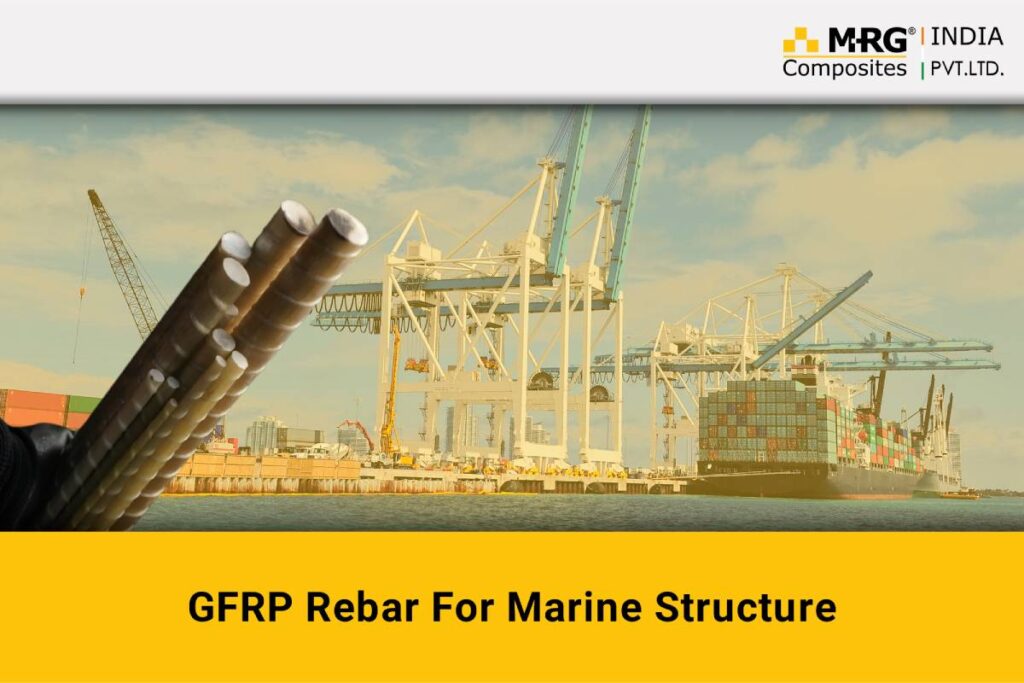
Marine structures face some of the toughest conditions in construction. Docks, piers, seawalls, breakwaters, ports, and other coastal structures are constantly exposed to water, moisture, salt, chlorides, waves, and changing weather.
For reinforced concrete, the type of reinforcement used has a direct impact on long-term durability. Steel rebar is strong, but it is vulnerable to corrosion when moisture and chlorides reach it. Over time, corrosion can cause the steel to expand, leading to cracks, concrete spalling, and expensive repairs.
GFRP Rebar for Marine Structures offers a corrosion-resistant alternative to traditional steel reinforcement. Made from glass fibers and a polymer resin, GFRP rebar does not rust like steel. Its lightweight and durable properties make it a practical choice for concrete structures exposed to harsh marine and coastal conditions.
What Are Marine Structures?
Marine structures are buildings, infrastructure, and engineered systems constructed in or near oceans, seas, rivers, lakes, and other bodies of water. They support activities such as transportation, coastal protection, navigation, fishing, energy production, and recreation.
Common examples include:
- Docks and piers: Provide access for boats and ships and support loading, unloading, and marine activities.
- Seawalls and breakwaters: Help protect coastlines, ports, and other infrastructure from waves, currents, and erosion.
- Ports and harbours: Support maritime transportation, cargo handling, and commercial activities.
- Lighthouses: Support maritime navigation by providing visual signals to vessels.
- Dams and water-control structures: Manage water levels, storage, flood control, and other water-related requirements.
- Artificial islands and offshore structures: Support infrastructure, transportation, energy, and other activities in marine environments.
These structures often face continuous exposure to moisture, saltwater, chlorides, waves, currents, and changing environmental conditions. Reinforcement selection therefore plays an important role in concrete durability.
Why is Reinforcement Durability Important in Marine Structures?
Marine environments are tough on reinforced concrete. Saltwater, moisture, and chlorides can slowly move through the concrete and reach the steel reinforcement inside.
When steel starts to corrode, it expands. This puts pressure on the surrounding concrete and can lead to cracks, delamination, and spalling over time.
Repairing damaged marine structures is often difficult and expensive. Reaching piers, docks, seawalls, and other waterfront structures is not always easy. Continued exposure to water and salt can also make the problem worse.
This is why choosing corrosion-resistant reinforcement is important when building concrete structures in marine and coastal environments. It helps reduce the risk of reinforcement corrosion and supports better long-term durability.
GFRP Rebar for Marine Structures
Glass Fiber Reinforced Polymer (GFRP) rebar is a composite reinforcement material made from glass fibers and a polymer resin matrix. Unlike conventional steel reinforcement, GFRP rebar does not rust or corrode in the same way as steel when exposed to moisture and chlorides.
This makes GFRP rebar for marine structures an attractive reinforcement option for concrete exposed to saltwater and other harsh environmental conditions.
GFRP rebar is suitable for applications such as:
- Docks and piers
- Seawalls
- Breakwaters
- Coastal retaining structures
- Marine concrete structures
- Waterfront infrastructure
- Ports and harbour structures
- Other concrete applications exposed to saltwater and chloride environments
The main advantage is its ability to provide reinforcement without introducing conventional steel corrosion as a deterioration mechanism.
Key Advantages of GFRP Rebar for Marine Structures
1. Excellent Corrosion Resistance
Corrosion is one of the biggest concerns when steel reinforcement is used in marine and coastal construction.
GFRP rebar offers strong resistance to corrosion because its polymer matrix and glass fibers do not undergo the conventional rusting process associated with steel reinforcement.
This makes GFRP reinforcement useful in concrete exposed to:
- Saltwater
- Chlorides
- Moisture
- Coastal environments
- Deicing salts
- Other aggressive exposure conditions
For marine structures, reducing the risk of reinforcement corrosion helps support long-term concrete durability.
2. Improved Durability in Harsh Environments
Marine structures need reinforcement capable of performing under demanding environmental conditions.
GFRP rebar durability makes it suitable for concrete applications where corrosion is a major concern. Its resistance to corrosion helps reduce one of the common causes of deterioration associated with steel-reinforced concrete.
For engineers and contractors, selecting corrosion-resistant reinforcement during the design stage can support longer-lasting infrastructure and reduce the need for corrosion-related repairs.
3. Lightweight and Easier to Handle
GFRP rebar is significantly lighter than steel reinforcement of comparable size.
The lower weight makes transportation, handling, positioning, and installation easier. Workers can handle longer reinforcement lengths with less lifting equipment, depending on the project requirements.
This lightweight characteristic is particularly useful for marine construction projects where transporting reinforcement to docks, piers, coastal sites, or other difficult-to-access locations presents logistical challenges.
4. High Tensile Strength
GFRP rebar offers high tensile strength compared with conventional steel reinforcement on a material-to-material basis.
However, GFRP and steel have different mechanical properties, so reinforcement should not be selected based on tensile strength alone. Engineers need to consider design requirements, bar diameter, stiffness, bond characteristics, environmental exposure, and applicable design standards.
When properly designed, GFRP reinforcement provides a durable reinforcement option for concrete structures where corrosion resistance is a priority.
5. Lower Maintenance Requirements
Corrosion-related deterioration often creates a cycle of inspection, repair, and maintenance in marine concrete structures.
Since GFRP rebar does not rust like steel, it helps address reinforcement corrosion as a source of deterioration. This can reduce the need for maintenance associated specifically with steel corrosion.
For infrastructure owners, this is particularly valuable because marine repairs often involve difficult access, service interruptions, and additional labour costs.
6. Non-Magnetic and Electrically Non-Conductive
GFRP rebar is non-magnetic and electrically non-conductive.
These properties make it useful in projects where magnetic interference or electrical conductivity needs to be limited. Depending on the application, this can provide an additional advantage over conventional steel reinforcement.
7. Suitable for Saltwater and Coastal Exposure
Marine structures are frequently exposed to saltwater, chloride-rich environments, and high moisture levels.
GFRP rebar saltwater resistance makes it a suitable option for projects where corrosion protection is a major design consideration. Its corrosion-resistant properties help address the exposure conditions commonly found in coastal and marine construction.
GFRP Rebar vs Steel Rebar in Marine Environments
Steel has been widely used as concrete reinforcement for decades. However, corrosion remains an important durability concern when steel-reinforced concrete is exposed to chloride-rich environments.
GFRP rebar provides a different reinforcement approach.
| Property | GFRP Rebar | Steel Rebar |
| Corrosion resistance | Excellent | Vulnerable to corrosion |
| Weight | Lightweight | Heavy |
| Magnetic properties | Non-magnetic | Magnetic |
| Electrical conductivity | Non-conductive | Conductive |
| Saltwater exposure | Suitable for corrosion-prone environments | Requires corrosion protection strategies |
| Handling | Easier due to lower weight | Requires more handling effort |
| Maintenance concern | No conventional steel rusting | Corrosion can require repair |
The choice between GFRP and steel should always be based on the project’s structural design, environmental exposure, applicable standards, and engineering requirements.
Applications of GFRP Rebar in Marine Construction
GFRP rebar for marine construction is relevant to a range of concrete applications where exposure to moisture, salt, and chlorides creates durability concerns.
Docks and Piers
Docks and piers remain exposed to water and marine conditions throughout their service life. GFRP reinforcement provides corrosion-resistant reinforcement for concrete components exposed to these conditions.
Seawalls and Breakwaters
Seawalls and breakwaters help protect coastlines and infrastructure from waves, currents, and erosion. Their reinforcement needs to withstand demanding exposure conditions, making corrosion resistance an important consideration.
Ports and Harbours
Ports and harbours contain various concrete structures exposed to marine environments. GFRP reinforcement offers a corrosion-resistant option for suitable concrete components.
Coastal Infrastructure
Coastal infrastructure faces moisture, salt spray, and chloride exposure. GFRP reinforcement can support durability in concrete applications where conventional steel corrosion is a concern.
Why Choose GFRP Rebar for Marine Structures?
The main reason to consider GFRP reinforcement for marine construction is its resistance to corrosion.
Unlike steel, GFRP bars do not rust when exposed to moisture and chlorides. This helps address one of the major durability concerns associated with reinforced concrete in marine environments.
Its lightweight construction also simplifies handling and transportation, while its non-magnetic and non-conductive properties provide additional benefits for specific projects.
For engineers, contractors, and infrastructure owners, these characteristics make GFRP rebar a practical alternative to conventional steel reinforcement for suitable marine and coastal concrete applications.
MRG Composites GFRP Rebar
MRG Composites manufactures GFRP rebar for concrete reinforcement applications where corrosion resistance, lightweight handling, and long-term durability are important considerations.
As a GFRP rebar manufacturer in India, MRG Composites provides composite reinforcement solutions for a range of construction applications.
Our GFRP rebar is designed for projects where conventional steel reinforcement presents corrosion-related concerns, including demanding environments such as coastal and marine construction.
If you are evaluating reinforcement options for a marine or coastal project, consult with your structural engineer and reinforcement supplier to determine the appropriate GFRP rebar specifications for your application.
Conclusion
Marine structures face continuous exposure to water, salt, chlorides, moisture, waves, and other demanding environmental conditions. These conditions make reinforcement corrosion an important durability concern for concrete construction.
GFRP rebar for marine structures offers a corrosion-resistant alternative to conventional steel reinforcement. Its corrosion resistance, lightweight construction, high tensile strength, and non-magnetic properties make it suitable for a range of marine and coastal concrete applications.
For docks, piers, seawalls, breakwaters, ports, and other suitable marine structures, GFRP rebar provides an option for addressing corrosion-related durability challenges and supporting long-term infrastructure performance.