
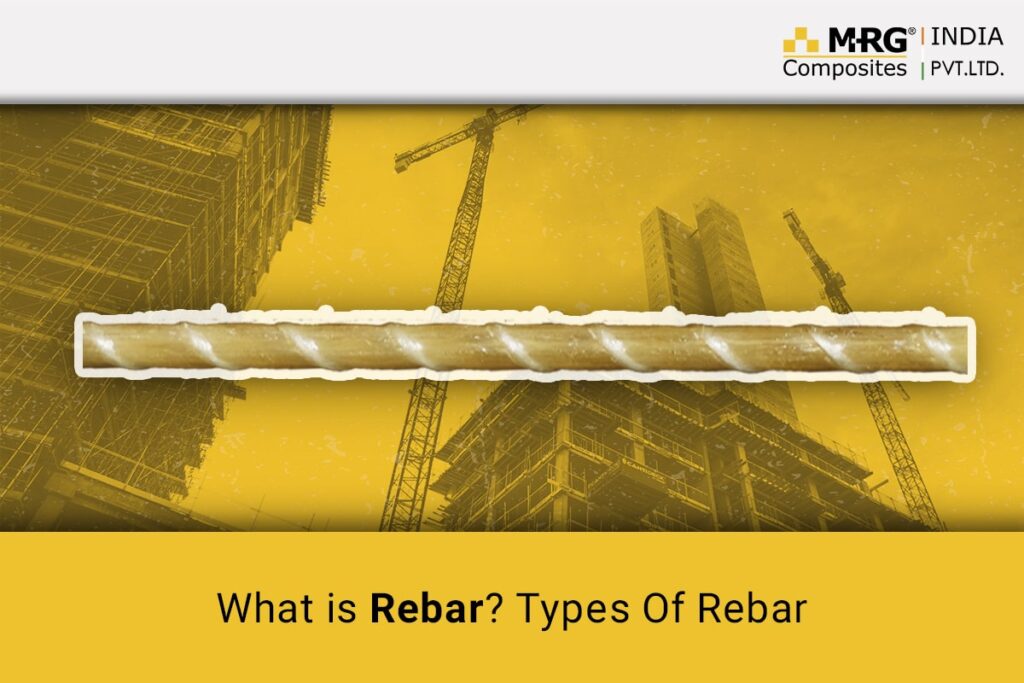
What Is Rebar? A Practical Guide to the Types of Rebar Used in Construction
If you’ve ever watched a concrete slab being poured, you’ve probably seen a grid of steel bars inside it. These bars are rebar, short for “reinforcing bar.” They help concrete handle tension and bending while improving its overall structural strength.
Concrete is strong under compression but weak under tension. Rebar helps overcome this weakness by reinforcing the concrete from within. Together, concrete and rebar create a stronger structural system.
Different projects use different types of rebar, including carbon steel, mild steel, TMT, stainless steel, galvanized, and epoxy-coated rebar. GFRP rebar is another option, offering lightweight and corrosion-resistant reinforcement. In this guide, we’ll cover the main types of rebar, their uses, and how GFRP compares with steel.
What is Rebar?
Rebar is a reinforcing bar placed inside concrete to help it handle tension and structural stress caused by loads, temperature changes, and everyday use.
You’ll find rebar in almost every kind of concrete structure, including:
- Foundations
- Footings
- Beams
- Columns
- Slabs
- Retaining walls
- Bridges
- Roads and pavements
- Tunnels
- Marine structures
- Water and wastewater structures
Properly designed and placed rebar does more than control cracks. It helps the structure handle heavier loads, resist bending, and stay strong for longer.
Why Is Rebar Used in Concrete?
The main purpose of rebar is to reinforce concrete.
Rebar helps:
- Improve tensile strength
- Control cracking
- Increase structural capacity
- Improve resistance to bending and tension
- Provide reinforcement in concrete elements
- Support long-term structural performance when properly designed and installed
Concrete takes most of the compressive load, while the reinforcement helps handle tension. Together, they work as one strong reinforced concrete system.
What Is Rebar Made Of?
Most rebar is still made from steel, with options such as mild steel, deformed steel, carbon steel, TMT, high-strength deformed bars, and stainless steel. Steel remains popular because it is strong, familiar, and easily available.
But steel isn’t the only option anymore. GFRP rebar uses glass fibers and polymer resin instead of metal. It’s a lightweight, corrosion-resistant alternative for projects where steel may be exposed to moisture, chemicals, or salts.
What Are the Different Types of Rebar?
The right type of rebar depends on the project. Factors like the structural load, exposure to moisture or chemicals, corrosion risk, design standards, and project requirements all play a role.
The main types of rebar include:
- Mild or plain steel rebar
- Deformed steel rebar
- TMT rebar
- High-strength deformed rebar
- Carbon steel rebar
- Epoxy-coated rebar
- Galvanized rebar
- Stainless steel rebar
- GFRP rebar
Let’s look at each type in more detail.
1. Mild or Plain Steel Rebar
Plain steel rebar has a smooth surface, without the ribbing you’d see on most modern reinforcement. The smooth surface is useful in some applications because it allows the bar to move slightly inside the concrete. This makes smooth bars a good choice for dowels and joints.
You’ll typically see plain rebar used in:
- Dowel bars
- Expansion and contraction joints
- Roads and pavements
It’s not the right choice anywhere that needs a strong mechanical bond between the bar and the surrounding concrete.
2. Deformed Steel Rebar
Deformed rebar has ribs or raised patterns running along its surface. These ridges help the bar grip the surrounding concrete and reduce slippage when the structure is under load.
It is one of the most common types of rebar used in construction. You’ll find deformed bars in foundations, columns, beams, slabs, walls, bridges, and other structural concrete work.
3. TMT Rebar
TMT stands for Thermo-Mechanically Treated. TMT bars go through a controlled heating and cooling process that makes the outer layer harder while keeping the core more ductile. This gives the bar a good balance of strength and flexibility.
TMT bars are commonly used in residential buildings, commercial buildings, industrial structures, foundations, columns, beams, and slabs.
The right TMT grade and bar size depend on the project’s structural design and applicable construction standards.
4. High-Strength Deformed Rebar
High-strength deformed rebar is a stronger version of standard deformed rebar. It has the same ribbed surface, which helps it grip the surrounding concrete and create a strong mechanical bond.
These bars are used when a project needs higher-strength reinforcement, such as in high-rise buildings, bridges, industrial structures, and heavy infrastructure.
The required grade and size should always follow the structural engineer’s design and applicable construction standards.
5. Carbon Steel Rebar
Carbon steel rebar is one of the most common reinforcement materials used in construction. It offers good strength at a relatively low cost, making it a practical choice for buildings, foundations, roads, bridges, and other concrete structures.
Its main drawback is corrosion. When carbon steel rebar is exposed to moisture or chlorides over time, it can start to rust and expand. This puts pressure on the surrounding concrete and can lead to cracking and deterioration.
For projects exposed to harsh or corrosive conditions, options such as coated steel, stainless steel, or GFRP bars may offer better long-term protection.
6. Epoxy-Coated Rebar
Epoxy-coated rebar is carbon steel rebar covered with a protective epoxy coating. The coating creates a barrier between the steel and moisture, chlorides, and other elements that can cause corrosion.
It is often used where corrosion risk is higher, such as in bridges, parking structures, marine structures, roads exposed to de-icing salts, and water-related infrastructure.
The coating needs careful handling during transport and installation. Scratches or damage can expose the steel underneath and reduce the protection against corrosion.
7. Galvanized Rebar
Galvanized rebar is steel rebar coated with a layer of zinc to help protect it from corrosion. The zinc coating provides extra protection compared with uncoated carbon steel, especially in outdoor or moisture-exposed environments.
It is commonly used in bridges, transportation projects, infrastructure, and other outdoor concrete structures.
Galvanized rebar still handles and installs much like regular steel rebar, but the zinc coating adds an extra layer of protection against corrosion.
8. Stainless Steel Rebar
Stainless steel rebar offers much higher corrosion resistance than conventional carbon steel reinforcement. It is a strong option for projects exposed to harsh conditions where long-term durability is a priority.
It is commonly used in marine structures, coastal infrastructure, bridges, water-related structures, chemical environments, and other high-value projects.
Stainless steel rebar costs more than standard steel, so it is usually selected when its higher corrosion resistance provides a clear long-term benefit.
9. GFRP Rebar
GFRP stands for Glass Fiber Reinforced Polymer. Unlike steel rebar, GFRP is made from glass fibers embedded in a polymer matrix, so there is no metal to rust or corrode.
Its corrosion resistance is one of its biggest advantages, especially in environments where moisture, chlorides, or chemicals can damage steel reinforcement. GFRP is also lightweight, has high tensile strength, and is non-metallic, making it non-conductive and non-magnetic.
Common applications of GFRP rebar include:
- Marine and coastal structures
- Bridges
- Water and wastewater facilities
- Chemical plants
- Roads and infrastructure
- Concrete exposed to chlorides
GFRP rebar is a strong option for projects where corrosion is a major durability concern. It also requires different design and installation methods than steel, so the appropriate product and specifications should follow the project requirements and applicable standards.
Rebar Types Comparison
Different types of rebar offer different levels of strength, corrosion resistance, durability, weight and cost. The best option depends on where the reinforcement will be used and what the project requires.
|
Rebar Type |
Material |
Corrosion Resistance |
Key Characteristic |
|
Mild Steel |
Steel |
Low |
Smooth surface and easy to work with |
|
Deformed Steel |
Steel |
Low |
Ribbed surface for better concrete bond |
|
TMT |
Steel |
Moderate |
Good strength and ductility |
|
Carbon Steel |
Steel |
Low |
Economical and widely used |
|
Epoxy-Coated |
Steel + epoxy |
Higher than uncoated steel |
Protective coating helps reduce corrosion |
|
Galvanized |
Zinc-coated steel |
High |
Zinc coating provides corrosion protection |
|
Stainless Steel |
Stainless steel |
Very high |
Excellent resistance to corrosion |
|
GFRP |
Glass fiber + polymer |
Excellent |
Non-metallic, lightweight and corrosion-resistant |
Steel rebar remains widely used for its strength and availability, but each type performs differently. Mild and carbon steel are economical, while TMT offers strength and ductility. Epoxy-coated, galvanized and stainless steel provide better corrosion protection. GFRP rebar is lightweight, non-metallic and highly corrosion-resistant. The right choice depends on the project, environment, service life and applicable standards.
Types of Rebar by Material
Rebar can also be classified based on the material used to manufacture the reinforcement.
Steel Rebar
Steel remains the most established reinforcement material. Carbon steel, TMT, stainless steel and coated steel reinforcement are widely used across construction projects.
GFRP Rebar
GFRP is a non-metallic reinforcement option made from glass fibers and polymer resin. Its resistance to corrosion makes it suitable for environments where steel reinforcement faces significant durability challenges.
Types of Rebar by Surface and Protection
Rebar can also be differentiated by its surface or corrosion-protection system.
Plain Rebar
Plain rebar has a smooth surface and is used for applications where a smooth reinforcement interface is required.
Deformed Rebar
Deformed rebar has ribs or surface patterns designed to improve bonding with concrete.
Epoxy-Coated Rebar
Epoxy-coated rebar uses a protective polymer coating over steel reinforcement.
Galvanized Rebar
Galvanized rebar uses a zinc coating to provide additional corrosion protection.
These classifications help explain why two steel reinforcement products with similar structural roles can perform differently in aggressive environments.
Common Rebar Sizes and Grades
Rebar is available in different diameters and grades. The required size depends on the structural design, concrete element and reinforcement requirements.
Common considerations include:
- Bar diameter
- Bar length
- Reinforcement spacing
- Steel or composite material properties
- Rebar grade
- Concrete cover
- Environmental exposure
- Applicable design standards
Rebar size should not be selected based only on the bar’s diameter. Structural calculations determine the required reinforcement area and arrangement.
Rebar vs Reinforcement Mesh
Rebar and reinforcement mesh both reinforce concrete, but they are used differently.
Rebar consists of individual reinforcement bars that are arranged according to the structural design. Reinforcement mesh consists of multiple reinforcement wires or bars arranged in a grid.
Rebar is commonly used where reinforcement needs to follow specific structural requirements, while mesh is useful for distributing reinforcement across slabs, pavements and other concrete elements.
GFRP reinforcement is available in both bar and mesh forms, providing non-metallic options for corrosion-sensitive applications.
How to Choose the Right Type of Rebar
There is no single best rebar type for every construction project.
Consider the following factors before selecting reinforcement:
1. Structural Requirements
The reinforcement must meet the strength and design requirements of the concrete element.
2. Environmental Exposure
Consider exposure to:
- Chlorides
- Seawater
- Moisture
- Chemicals
- De-icing salts
- Wastewater
Aggressive environments often require greater attention to corrosion protection.
3. Service Life
For infrastructure designed for a long service life, reinforcement durability becomes an important part of material selection.
4. Weight and Handling
Lightweight reinforcement such as GFRP reduces the weight of reinforcement materials and simplifies handling at the construction site.
5. Applicable Standards
The selected reinforcement should comply with the relevant specifications and design standards for the project.
6. Installation Requirements
Consider cutting, bending, placement, tying, concrete cover and other installation requirements before selecting the reinforcement system.
Conclusion
The different types of rebar serve different construction requirements. Conventional options such as carbon steel, deformed steel and TMT remain widely used, while epoxy-coated, galvanized and stainless steel reinforcement provide additional corrosion protection.
GFRP rebar offers a non-metallic alternative for projects where corrosion resistance, lightweight reinforcement and other specialized properties are important.
Understanding the material, surface, strength, corrosion resistance, application and design requirements helps engineers and contractors select the right reinforcement for each project.
Frequently Asked Questions About Rebar
What factors should you consider when choosing rebar?
Consider the structural requirements, environmental exposure, expected service life, reinforcement weight, installation requirements and applicable design standards.
Which rebar is suitable for marine and coastal structures?
Marine and coastal structures face moisture and chloride exposure. Stainless steel, epoxy-coated steel, galvanized steel and GFRP rebar are reinforcement options considered for these conditions, depending on the project requirements.
Is GFRP rebar suitable for water and wastewater structures?
Yes. GFRP rebar is suitable for water and wastewater structures where corrosion resistance is an important design consideration. It is non-metallic and does not rust.
What is the difference between TMT and deformed rebar?
TMT describes how the steel bar is processed to achieve a balance of strength and ductility. Deformed rebar refers to the ribbed surface pattern that improves its bond with concrete. A TMT bar can also have a deformed surface.
What are the advantages of GFRP rebar over steel?
GFRP rebar is lightweight, non-metallic and highly resistant to corrosion. It also has high tensile strength and is non-conductive and non-magnetic, making it useful for specific applications where steel has durability or electromagnetic limitations.
How does rebar size affect concrete reinforcement?
Rebar size affects the amount of reinforcement provided in a concrete element. The required diameter, spacing and arrangement should be determined by the structural design rather than selected based on bar diameter alone.